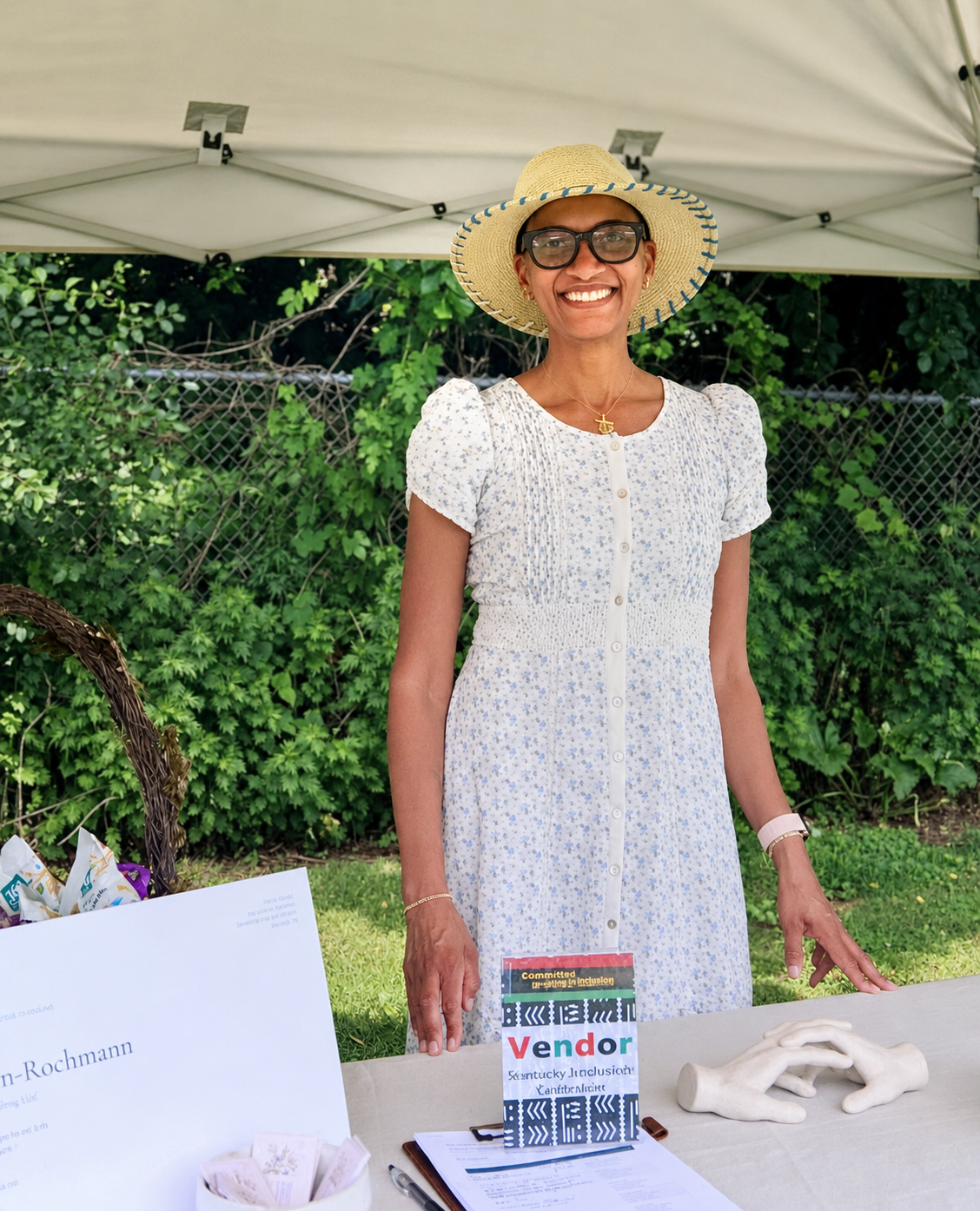
I set up a table at the Sewickley Community Center's Juneteenth Community Day — a community celebration running from 2 to 7 pm, with free admission, complimentary hamburgers and hotdogs, free swimming, and family activities open to everyone. Vendors and outreach organizations paid for their space; the Center made sure that everything facing the community came at no cost.
I want to be honest about why I was there, and what it meant to me to be there.
Why This Event
When I learned that the Sewickley Community Center was organizing a Juneteenth Community Day with a health and wellness focus, it felt like exactly the right place for Harbor & Home to show up. Not to sell something. Not to hand out cards and collect leads. But to be present in a community conversation about wellbeing — which, at its fullest, has to include the end of life.
End-of-life planning is still something many people associate with hospitals, with crisis, with old age. It's something to deal with later — when you have to, not before. One of the things I believe most firmly is that the best time to have these conversations is before the emergency, before the diagnosis, before the moment when everything is moving too fast for anyone to think clearly. That's not a morbid idea. It's a compassionate one.
A community wellness event felt like a natural home for that message.
What I Brought
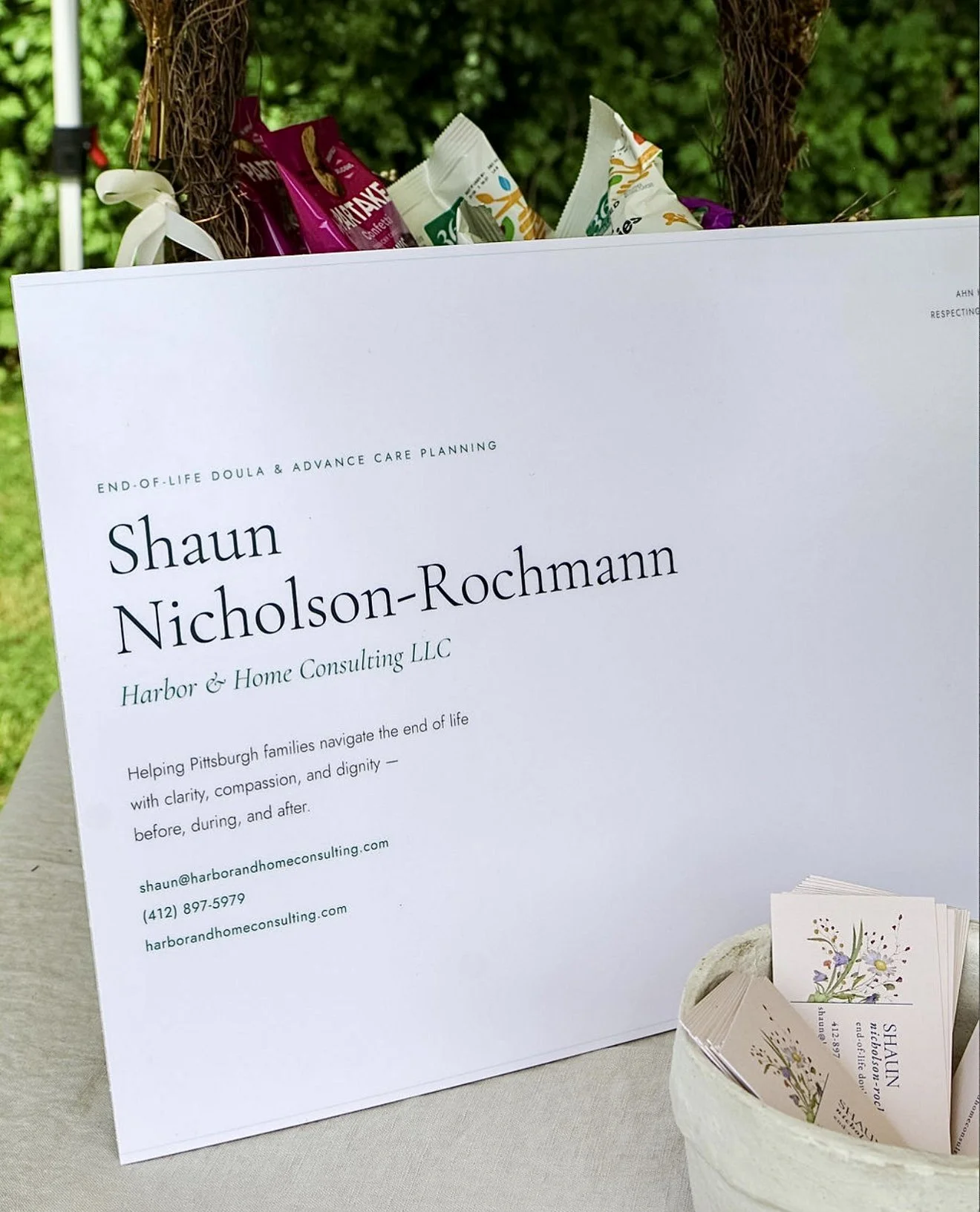
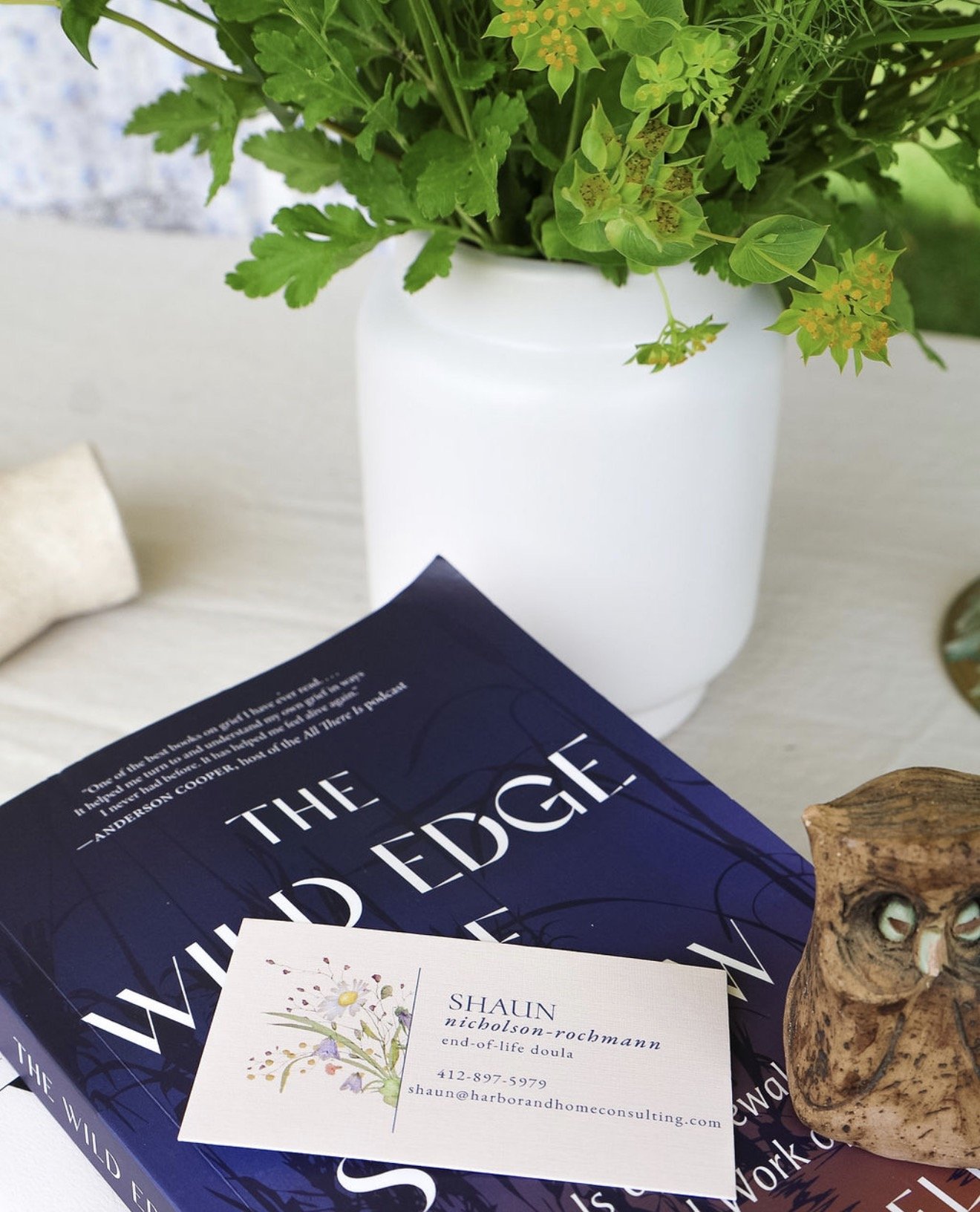
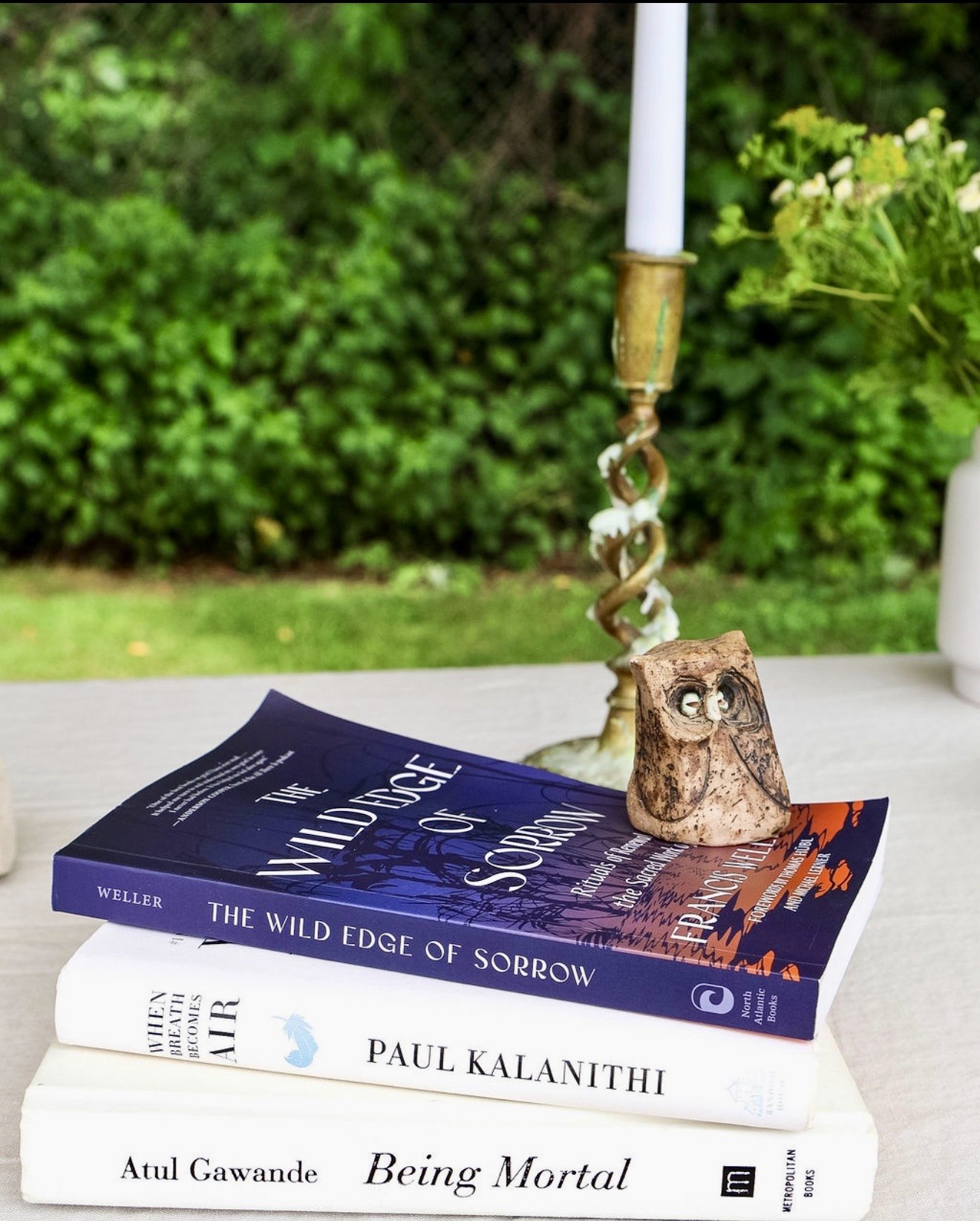
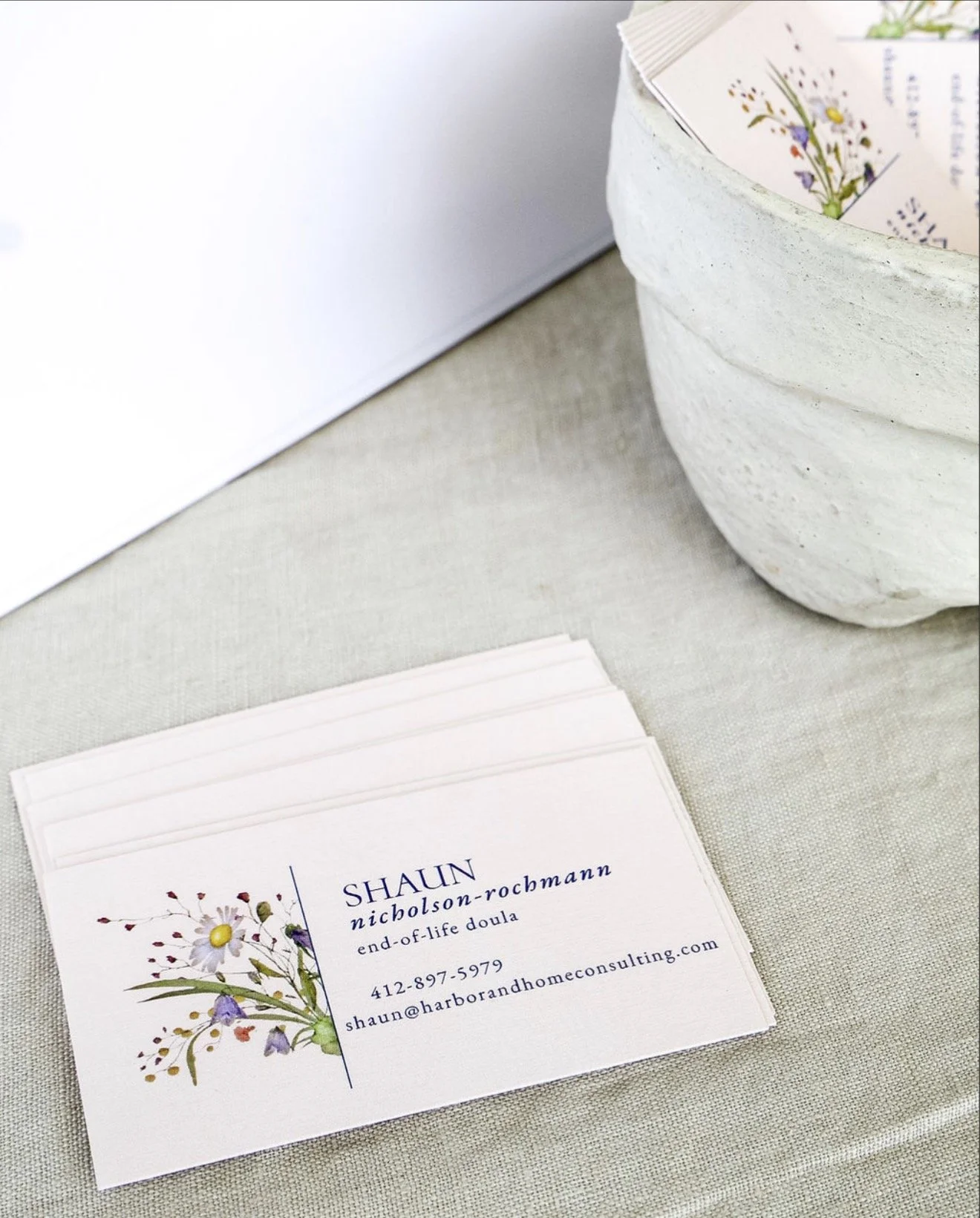
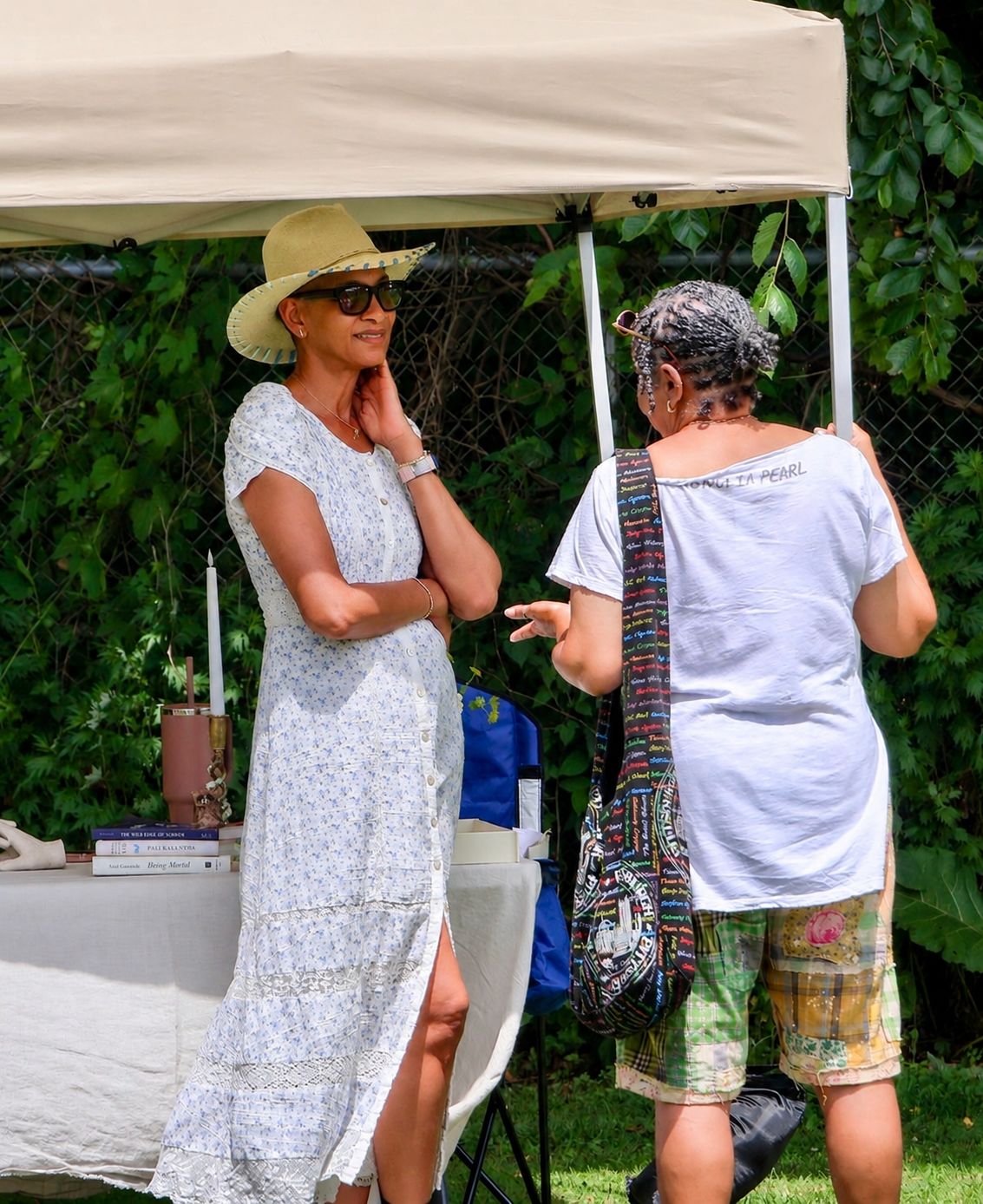
The table was simple. The three books I keep at every event — The Wild Edge of Sorrow, When Breath Becomes Air, and Being Mortal — because they are the books I return to, and because they say something about the spirit of this work without me having to explain it. A botanical arrangement in a white vase. Business cards. My laminated table sign. And myself.
What I was really there to offer was a conversation — brief or long, depending on what someone needed. Some people walked past. Some stopped and asked questions. Some wanted to understand what an end-of-life doula actually does. A few seemed to already know someone who needed this kind of support, and were quietly taking that in.
What I Noticed
I'll be honest about the full picture of the afternoon. Not everyone who walked by was ready for this conversation. One person stopped, read the table sign, looked at me, and said — with complete sincerity and zero hesitation — "Oh, hell no. I'm not there yet." And then kept walking.
I loved that. I really did. Because she's not wrong. She gets to decide when she's ready, and the fact that she said it out loud instead of just walking past means something landed. The door exists. She knows where it is.
That's also part of this work.
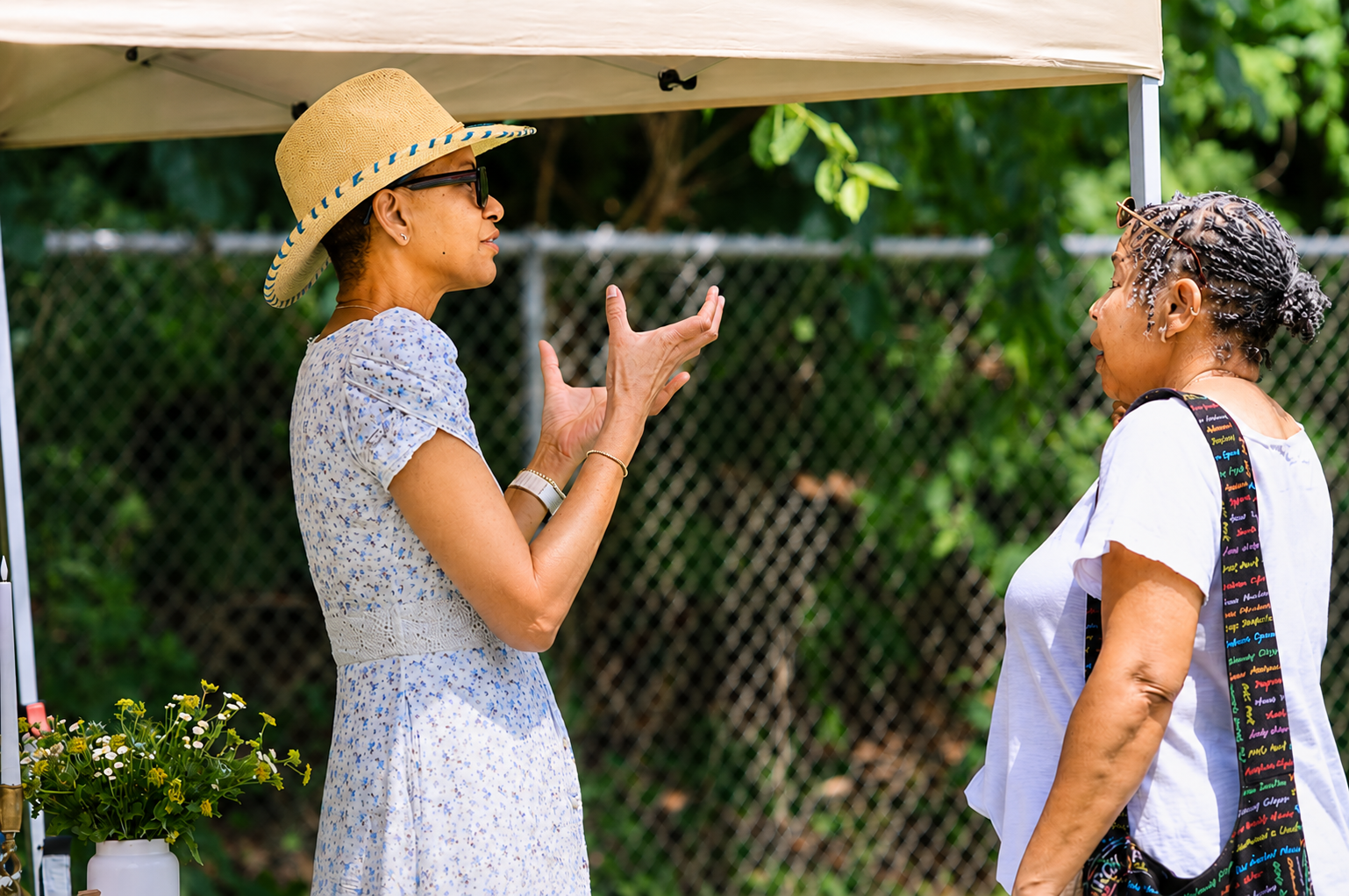
The conversations that stayed with me were the ones where something shifted in the person I was talking to. A nod of recognition. A moment where someone said, in their own words, I've been thinking about this — or my mother — or I didn't know this existed.
One conversation in particular is staying with me. Without sharing any identifying details, I spoke with someone who is the sole caregiver for a parent in memory care — showing up every other day, navigating hospice, managing everything that comes with watching someone you love decline slowly and without a clear timeline. She is doing it completely alone. And somewhere in the middle of all of it, she has set aside the parts of her own life that used to restore her — the travel, the freedom, the sense of herself outside of this role.
She didn't come to the table looking for a doula. She came because something drew her over. And what she said, in her own way, was that she hadn't realized anyone was trained specifically for this — not just for the person dying, but for the people beside them.
That's the work. That's exactly the work.
Caregivers are often the invisible center of a dying person's world. They organize the appointments, translate the medical language, absorb the grief in real time while still needing to function. They give up things quietly — travel, spontaneity, their own sense of rhythm — and rarely name it as loss, because it doesn't feel like the right kind of loss to name. The person they love is still here.
But caregiver support is central to what Harbor & Home offers. Respite. Presence. Someone to sit with the person who is ill so that the person who loves them can take a breath — go for a walk, sleep in, remember for a moment what it feels like to not be on call.
If you are that person — if you recognized yourself somewhere in these words — I'd like you to know that support exists for you too. Not just for your loved one. For you.
Why Juneteenth
I want to say something directly about the significance of the day itself.
Juneteenth marks the emancipation of enslaved people in the United States — and it is a day that carries profound weight about what it means to be free, to be recognized, to have your humanity fully honored. It felt meaningful and right to bring a practice rooted in human dignity, autonomy, and the right to a good death into that space.
End-of-life care in this country has never been equally distributed. Advance care planning, hospice access, the kind of individualized, presence-centered support that Harbor & Home offers — these have historically been more available to some communities than others. I think about that often. And I think about it when I'm deciding where to show up and who to have conversations with.
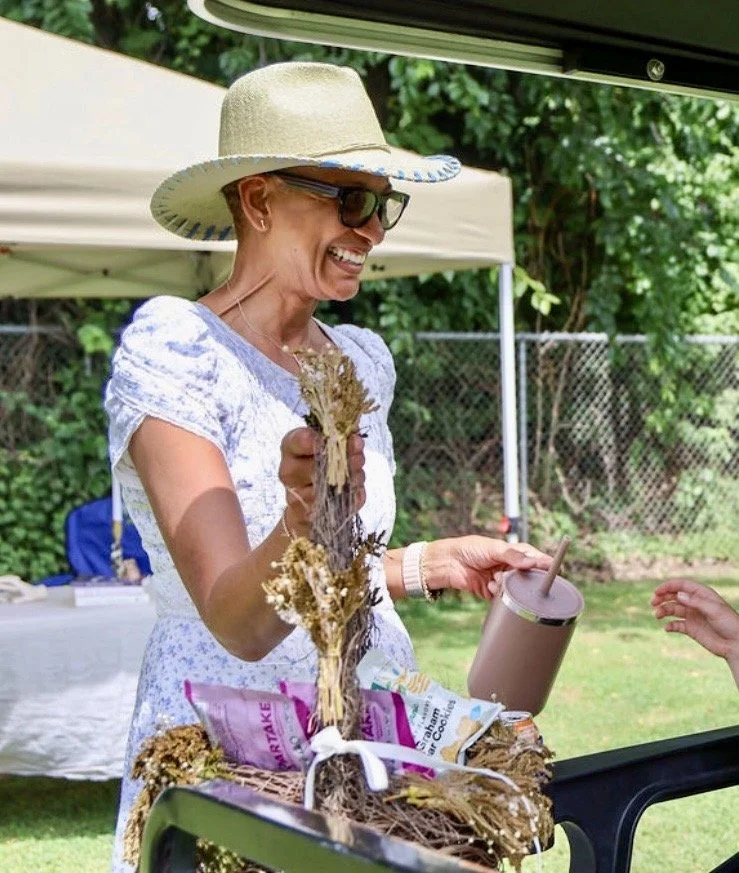
The Sewickley Juneteenth Community Day was a beautiful afternoon — children, families, music, neighbors finding each other. I was honored to be part of it.
What's Next
One of the unexpected gifts of the day was the warmth of the Sewickley Community Center itself. Amber reached out the very next morning to offer the space for a Harbor & Home community gathering this summer. And G. Stratton Nash, Vice President of the Board of Directors, personally walked me through the entire facility and extended the same invitation.
That kind of welcome means everything to a new practice.
We're in the early stages of planning — mid to late July is the target, with space for up to 50 or 60 people, a full kitchen, and a screen for a short presentation. It will be an unhurried evening to ask questions, learn more about end-of-life planning, and connect with others who are thinking about these things too.
Details coming soon. If you'd like to be notified when the date is confirmed, reach out at shaun@harborandhomeconsulting.com or (412) 897-5979 and I'll make sure you hear first.
A Note for Anyone Who Stopped By
If you picked up a card, or we spoke briefly, or you've been thinking since Saturday about something that came up — I'd love to hear from you. The first conversation is always free, always unhurried, and always on your terms.
You can reach me at shaun@harborandhomeconsulting.com or (412) 897-5979.
There's no wrong time to start this conversation. But the right time is almost always sooner than we think.
Photos by Amber L. Deemer Photography
Floral arrangement by Fox & Fleur, Sewickley, PA
